

By Steven M. Canfield, D.D.S., Senior Dental Director
Key takeaways:
- Abused dental procedure codes continue to drive significant improper payments and preventable costs.
- Claim splitting is a common tactic used to bypass reimbursement controls and inflate payments.
- Prepay clinical review, analytics, and stronger documentation requirements can improve dental payment integrity.
The dental claims landscape has grown increasingly complex, leading to an increase in the misuse of specific dental codes and improper billing practices. Though many errors stem from misunderstandings among staff about proper billing practices rather than intentional fraud, overuse of codes involving bone grafts, buildups, scaling, and root planing for treatment that is not clinically necessary can harm patient health and erode trust between payers and providers.
Among these payment schemes, overbilling and claim splitting have become common practices that undermine the integrity of dental payments, though not all instances reflect intentional fraud. In 2025, dental expenditures reached $198 billion. As the dental industry grows and evolves, these schemes become harder to identify, driving up costs for payers and members due to improper payments.
In this eBook, we highlight the procedures most frequently misused and examine their causes, consequences, and the steps payers can take to mitigate improper and abusive dental billing. By understanding how these schemes work, dental payers can build a more ethical, efficient, and transparent claims process.
Commonly abused codes and their impact
Abusive billing practices often revolve around the misuse of certain dental procedure codes. These codes, when improperly applied, can result in inflated costs and undermine the integrity of the dental claims process. Some of the most commonly abused codes include bone grafts, non-surgical root canal obstructions, buildups, localized antimicrobial agents, and surgical extractions.
Bone grafts
In 2025, Cotiviti dental clients were billed $9 million for bone grafts, a procedure often added to extractions without showing the need to enhance the bone present for a future restoration. Following clinical review of the documentation, our experts identified nearly $2.5 million in savings addressing improper billing for bone grafts.
Root canal treatments
The code D3331, used for treating root canal obstruction, is frequently billed alongside routine root canal treatments (RCTs) without sufficient evidence of an obstruction. In 2025, clients were billed $7M million under this code. After expert review, our clients saved $538,000.
Buildups
Buildups under crowns are another area prone to overbilling where providers must demonstrate that there was insufficient retention in a crown, which necessitates an extracoronal restorative procedure. If documentation fails to demonstrate the necessity for a buildup procedure, clinical review can flag the claim. In 2025, Cotiviti’s own were billed $195 million for buildups, with $5.3 million in improper charges were identified and prevented.
Gingivectomies and localized antimicrobial agents
Codes like D4381 pertain to the localized delivery of antimicrobial agents via a controlled-release vehicle into diseased crevicular tissue. This code is used for each individual tooth when an FDA-approved antimicrobial agent is sub-gingivally placed into periodontal pockets of at least 5mm depth. In 2025, Cotiviti clients were billed $8.6 million for procedure code D4381. Our team’s clinical reviews ensured billing aligned with treatment guidelines, resulting in $43,000 in savings.
Extractions
In 2025, procedure code D7210, associated with the surgical extraction of an erupted tooth, was billed at $282 million. Clinical reviews reclassified many of these cases to D7140, a less intensive procedure, resulting in $18.5 million in savings for clients.
Scaling and root planing
Historically, scaling (D4341) and root planing (D4342) have been among the most abused codes. Over a three-year period from 2019 to 2022, Cotiviti clients were billed over $16 million for scaling and root planing (SRP). After reviewing the providers' submitted records against the documentation requirements for the procedure, our clinical experts denied claims or recommended a recode.
These examples reveal the widespread financial impacts of abusive billing practices, underscoring the need for vigilance and robust review processes.
Claim splitting trends
Claim splitting occurs when dental providers separate a single claim into multiple submissions. While this can be legitimate for administrative reasons, it is often misused to manipulate reimbursement by dividing procedures typically performed in one visit into separate claims. This can be done by using different dates of service, billing lines, or provider identification. Improper claim splitting is used to bypass reimbursement limitations, inflate payments, or obscure the true nature of services. Understanding this practice is important to help ensure payment integrity for both dental providers and insurers.
Some common patterns and their implications include:
- Multiple extractions: Claims for multiple extractions on the same date of service are split into separate submissions to avoid rules that apply to four or more extractions.
- X-rays and root canals: X-rays are submitted on a separate claim line from the root canal procedure to bypass review.
- Prophylaxis (D1110) and periodontal maintenance (D4910): These are often billed on the same date of service but under separate claims.
Proper claim splitting can benefit a patient with dual coverage or reflect true dates of service for treatment provided over multiple appointments. But often, this process is misused, leading to overpayments and obscuring the necessity of services. This can increase the risk of investigations, audits, or fraud allegations, and further complicate the dental claims landscape.
Key recommendations
Prevention of abusive billing requires a proactive approach rooted in education, review, and system improvements. Dental payers can take actionable steps to help mitigate these practices.
- Implement robust utilization reviews. Regular and thorough reviews of claims can identify patterns of abuse. For example, monitoring high-frequency use of specific codes like D3331 and D7210 can flag improper billing.
- Enforce clear documentation requirements. Require dental providers to submit comprehensive documentation that justifies the procedures billed. For instance, buildups should only be reimbursed when evidence shows insufficient retention for an extracoronal restorative procedure.
- Educate providers. Provide training and resources to dental providers on proper billing practices, including clear explanations of coding guidelines and payer policies.
- Leverage advanced analytics. Use data-driven solutions to identify trends and anomalies in claims submissions. Advanced analytics can detect patterns like improper claim splitting or repeated overuse of certain codes.
- Collaborate with providers. Work collaboratively with dental offices to establish clear communication channels and resolve billing discrepancies amicably. Leading peer-to-peer reviews with patient benefits in mind can ease tension and quickly clarify documentation discrepancies.
- Monitor claim splitting practices. Develop systems to track and analyze claim splitting patterns, ensuring they align with administrative guidelines.
Abusive billing practices not only inflate costs but also erode trust between dental providers and payers. By addressing trends in overbilling and claim splitting through systematic reviews, education, and collaboration, dental payers improve payment integrity and help alleviate provider abrasion. Adopting these measures not only protects financial resources but also ensures a fair and transparent claims environment, ultimately benefiting both providers and patients.
Cotiviti’s approach to dental payment integrity
Backed by more than 20 years of dental payment integrity experience, Cotiviti's Dental Claim Accuracy combines configurable rules, analytics, and expert review to help plans detect improperly coded claims, inappropriate billing, and emerging FWA patterns. The result is a full-service approach that reduces internal IT and clinical lift, helps avoid pay-and-chase recovery, and delivers measurable savings. Across lines of business and membership sizes, plans typically save 3% or more annually by partnering with Cotiviti to identify improperly coded dental claims or wasteful spending.

Start the conversation with Cotiviti
Learn more about how we can help you advance your dental payment integrity operations by setting up an exploratory call with our team.

About the author
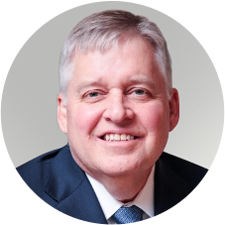 |
Dr. Canfield works with Cotiviti’s prepayment leadership team and has been responsible for Dental Claim Accuracy operations since 2012, including overseeing a panel of professional consultants that perform clinical claim reviews. He also works as a clinical instructor at the University of Utah School of Dentistry and operates a private practice out of Salt Lake City, Utah. Dr. Canfield attended dental school at Creighton University, and has been practicing dentistry and reviewing dental insurance claims for more than 30 years. |
