

By Naomi Murphy, Executive Vice President, Data Mining and COB
Coordination of benefits (COB) is undergoing a fundamental transformation. As healthcare coverage grows more complex and data ecosystems grow more fragmented, traditional COB postpay recovery approaches are no longer sufficient.
The core challenge isn't data availability—it's alignment. Payers have broad but delayed visibility; providers have real-time but narrow data. This information asymmetry drives errors, payment misalignment, and rising administrative costs.
Historically a downstream recovery function, COB now serves as a critical lever for improving payment accuracy and financial control across the entire payment lifecycle. But to remain effective, it must evolve from reactive recovery to proactive intervention embedded throughout the payment continuum—shifting from retrospective correction to real-time financial control.
From recovery to prevention: The new role of COB
Health plans are challenged with administrative capacity, access to comprehensive member coverage data, and specialized expertise required for accurate COB validation. This leads to overpayments when gaps emerge between members, providers, employers, and payers. A significant portion of this complexity stems from accurately determining primacy and order of benefits—decisions that directly impact payment accuracy but are often applied inconsistently when data is incomplete or expertise is limited.
COB is not a data problem; it’s a coordination problem. Many plans view their programs as mature because they rely on external databases (e.g., CAQH) for prepay validation, as well as internal staff and basic postpay reviews to manage COB workflows. However, these approaches lack the integrated data, analytics, and expertise needed to identify and resolve complex COB scenarios.
In an environment of rising medical costs and increasingly complex coverage changes, traditional postpay COB recovery is expensive, disruptive, and often too late. Most overpayments stem from incomplete or outdated member data at enrollment, which are issues that recovery efforts address slowly and only partially.
Why timing matters
As COB continues to evolve, timing has emerged as one of the primary drivers of performance. Plans that identify other coverage earlier in the lifecycle achieve stronger financial outcomes, lower administrative costs, and reduced provider and member friction. While many organizations still rely on postpay or prepay validation, the industry is shifting toward pre-claim intervention—correcting coverage at the member level before claims are even generated.
As COB shifts earlier in the payment lifecycle, the impact across cost, efficiency, and data quality becomes more pronounced. Figure 1 outlines how postpay, prepay, and pre-claim approaches compare across key dimensions.
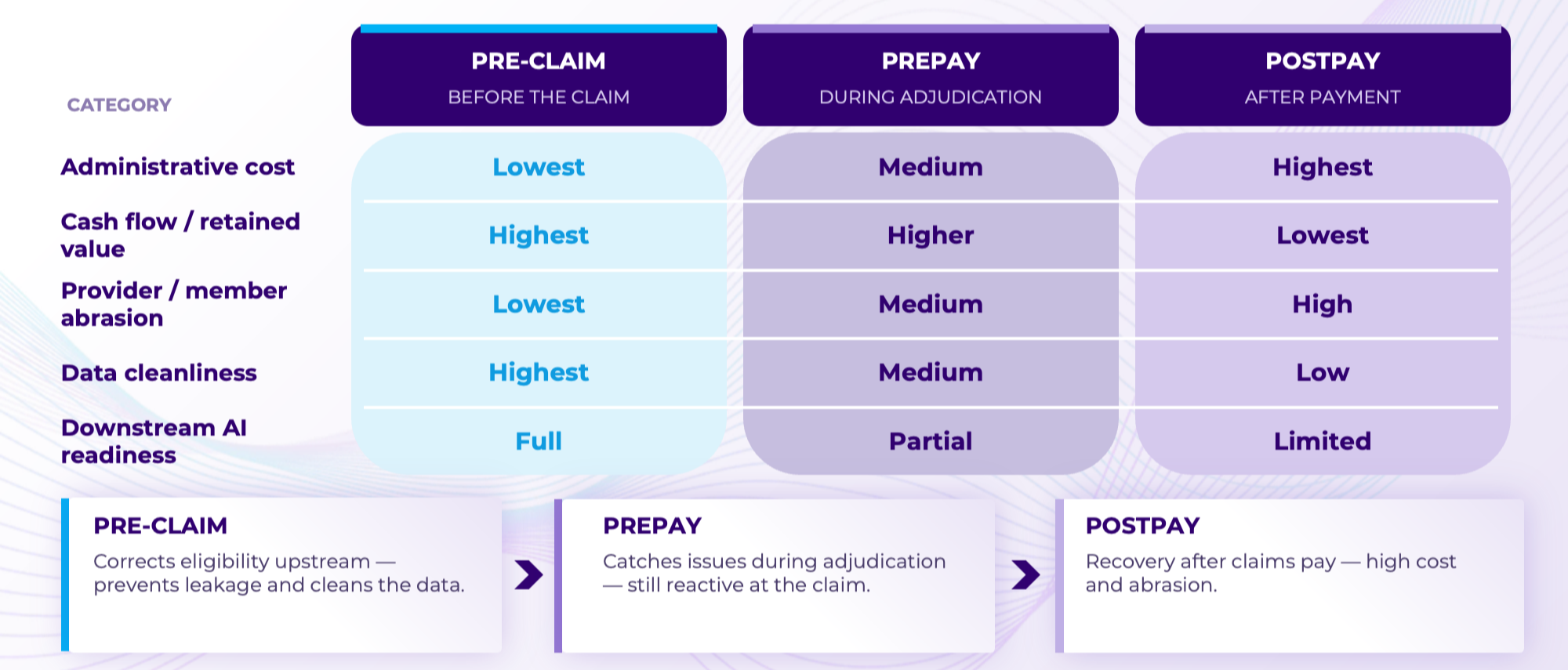
Figure 1. Comparison of COB detection timing.
Earlier intervention (pre-claim) drives lower costs, cleaner data, and higher retained value compared to prepay and postpay approaches.
Building the foundation to move COB further upstream
As COB shifts upstream, success depends less on acquiring more data and more on aligning how data is shared, interpreted, and acted upon. The core challenge is not availability—payers and providers each hold critical insights—but coordination. Payers often have broad but delayed visibility, while providers operate with real-time but limited data. This misalignment drives errors, payment leakage, and administrative burden.
Earlier detection, therefore, depends on a coordination layer that connects fragmented signals, synchronizes timing, and enables consistent decision-making before claims are submitted. Moving upstream requires more than incremental process changes—it requires coordinated capabilities that ensure insights are acted on in a timely, scalable way.
-
Connecting fragmented coverage views: Upstream COB depends on reconciling payer and provider perspectives. A coordination layer aligns these views, surfacing discrepancies early and preventing inconsistencies from carrying downstream.
-
Real-time enrollment and coverage signals: Timeliness is not just about faster data, but about coordinated action. Aligning enrollment updates and coverage changes with workflows ensures issues are addressed as they occur, reducing reliance on downstream correction.
-
Prioritization through artificial intelligence: With multiple signals emerging, effective COB requires deciding where to act first. Predictive models and prioritization frameworks are most effective when embedded in coordinated workflows that route high-impact issues quickly and consistently.
-
Accurate primacy and order-of-benefit determination: Determining primacy remains complex and highly sensitive to timing and context. A coordinated model ensures consistent application of rules across scenarios, reducing variability and limiting downstream payment errors.
-
Verification and validation drive accuracy: As intervention moves upstream, accuracy becomes more critical. Coordinated validation processes and feedback loops help confirm coverage and order of benefit determinations early and continuously improve performance, minimizing rework.
-
Enabling a scalable, data-driven COB model: Taken together, these capabilities shift COB from reactive correction to proactive prevention. By focusing on coordination—aligning data, timing, decisions, and expertise—health plans can reduce information gaps, improve efficiency, and minimize downstream rework.
Executing an effective pre-claim COB strategy
Moving COB upstream is not just about having the right foundation—it is about consistently executing against it. Health plans that are successful at the pre-claim level translate data, insights, and expertise into timely, repeatable actions across systems and workflows.
To execute effectively, several capabilities must come together in a coordinated, operational model:
- Acting on real-time enrollment and coverage signals: Integrate enrollment and maintenance transactions directly into workflows so coverage changes trigger immediate action, rather than relying on downstream claim-based detection
- Maintaining and activating a dynamic coverage data layer: Ensure member coverage data is not only continuously updated, but actively used to inform decisions, trigger interventions, and guide workflows in real time
- Embedding COB expertise into decision workflows: Operationalize domain knowledge within review processes so complex primacy and eligibility scenarios are resolved accurately and consistently at scale
- Driving timely, consistent intervention across the enterprise: Apply insights in a structured, repeatable way across systems, teams, and touchpoints to ensure issues are resolved before claims submission—not after
The broader impact of moving COB upstream
As coordination of benefits shifts earlier in the lifecycle, the impact extends well beyond individual claims. Addressing coverage accuracy upstream reduces inefficiencies, stabilizes workflows, and improves the overall experience for health plans, providers, and members.
Health plans that successfully adopt earlier intervention strategies begin to see meaningful improvements across several operational dimensions:
- Reduced downstream burden and rework
- Improved operational efficiency and stability
- Enhanced provider and member experience
- Stronger data foundation for the enterprise
- More intelligent, data-driven decisioning
The future of COB is defined by one core principle: intervene earlier to prevent errors before they occur. Shifting from postpay recovery to pre‑claim intervention and connecting data, intelligence, and workflows health plans can transform COB into a proactive, enterprise‑level capability where payment accuracy is built into every transaction from the start.
Take the next step
By combining AI-enabled analytics, automation, and deep domain expertise, Cotiviti supports COB proactively at enrollment, prospectively before claims pay, and retrospectively when recovery is still needed—driving more accurate payments and long-term value across the member lifecycle. Contact us to talk with a COB specialist about how we can help take your program further upstream.

About the author

|
Naomi is a results-driven executive leader responsible for Cotiviti’s Data Mining and Coordination of Benefits solutions, with a strong focus on operational excellence and the responsible use of AI. She aligns strategy, technology, and execution to deliver scalable, high-impact outcomes for health plan partners and the broader healthcare ecosystem. A member of Cotiviti’s leadership team since 2013, Naomi brings deep institutional knowledge, extensive subject matter expertise, and hands-on experience across a diverse client portfolio. Prior to joining Cotiviti, Naomi practiced as a trial attorney, bringing strong communication and critical-thinking skills that continue to support client success. |
